The Operating System

If you make decisions without really knowing why, and regret them more than you should, you'll probably be interested in what I'm writing here.
Or if you catch yourself doing things you never even decided to do.
Before you know it, you're living life on autopilot, leaving aside the things that really matter to you.
Yeah. I have these problems.
And for a while now I've been thinking about how to deal with it…
More specifically, thinking about thinking itself - about the way we face the world, and how that changes the course of our lives and our day-to-day.
And I came to the conclusion that it all originates in my operating system.
The Operating System
Imagine you just bought a new phone.
But this phone came without an operating system installed.
The phone would be useless if you couldn't run Android, iOS or even Windows Phone on it.
The operating system is what will let you:
- Interact with the hardware (camera, touchscreen, etc.)
- Download apps to solve specific problems.
Now consider that you are also made of hardware and software.
Your hardware is your body: your brain, your lungs, your hands, etc.
Your operating system?
It's your mind - conscious and subconscious.
Let's assume most people come into the world and spend the first years of their lives building an operating system that lets them interact with their own bodies.
So in childhood you learn to crawl, then to use your legs, and soon you're running around, using your whole body in complex ways.
One of the first abstract concepts you learned was language.
Language is one of the first “apps” you installed on your operating system so that you could communicate with other human beings.
And soon you went off to school, which is childhood's “app store” - where you learned to read, basic math operations, etc. etc., and most likely later found yourself in college installing much more complex “apps”.
If you enjoyed this post, you'll probably be interested in the topics I write (and read) about.
Every Monday I share a new post, along with interesting articles and books.
Give it a try and see if you like it:
Now: unlike a phone running Android or iOS, where you know exactly which apps are installed, can access them easily, and move fluidly between all sorts of functions -
OUR MIND IS A MESS!
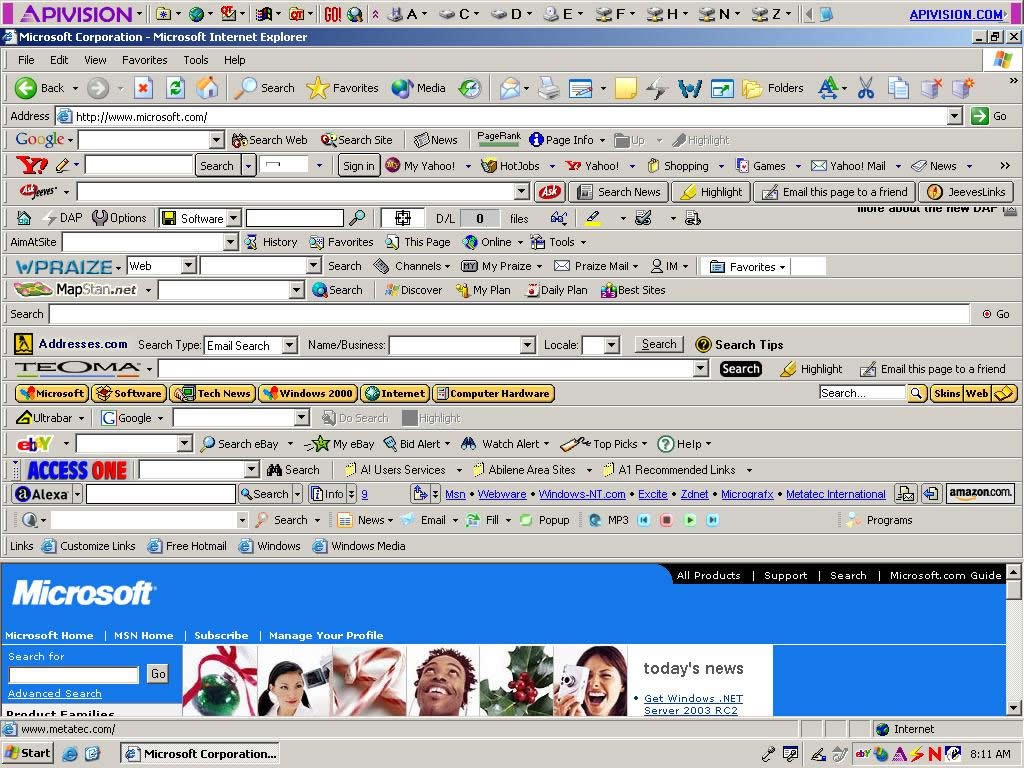
It's more like that Windows XP PC your aunt uses, with thousands of viruses and an Internet Explorer with more toolbars than browsing space, than anything organized and efficient.
And that can't be good for you…
Let's now call this operating system of the human brain by the name it should be called:
Philosophy
Philosophy is the way you think, it's how you face the world, and how you choose to employ your skills.
Philosophy is usually associated with unintelligible, impractical philosophical treatises.
Anyone who knows me knows I like to set the extreme opposite of unintelligible and impractical as an ideal for my life.
Well then: in truth, it's much harder to do anything without philosophy. It's necessary in order to be lucid and effective.
We already know there's no escaping our operating system. It's necessarily there, controlling how we interact with the world.
Now, the choice you have to make is this: do you want to live with an inefficient, confusing operating system full of “viruses”, or do you want to live with an operating system that works well?
As a human being, you have no choice about the fact that you need a philosophy. Your only choice is whether you define your philosophy through a conscious, rational, disciplined process of thought, through a scrupulously deliberate logical system - or whether you let your subconscious accumulate a junk heap of dubious conclusions, false generalizations, undefined contradictions, undigested slogans, unidentified wishes, doubts and fears, thrown together by chance, but integrated by your subconscious into a kind of mongrel philosophy - all fused into a single, solid weight: doubt in your own ability, like chains binding you where the wings of your mind should have been.
As a human being, you have no choice about the fact that you need a philosophy. Your only choice is whether you define your philosophy by a conscious, rational, disciplined process of thought and scrupulously logical deliberation—or let your subconscious accumulate a junk heap of unwarranted conclusions, false generalizations, undefined contradictions, undigested slogans, unidentified wishes, doubts and fears, thrown together by chance, but integrated by your subconscious into a kind of mongrel philosophy and fused into a single, solid weight: self-doubt, like a ball and chain in the place where your mind’s wings should have grown.
Ayn Rand, Philosophy: who needs it?
Living a life of unconsidered, random decisions will probably result in unhappiness, unfulfillment, disillusionment, and feed toxic feelings whose origin you can't even identify.
If at this point I still haven't managed to convince you that defining a philosophy for your life is really important, and that it improves your life significantly, I give up.

If you enjoyed this post, you'll probably be interested in the topics I write (and read) about.
Every Monday I share a new post, along with interesting articles and books.
Give it a try and see if you like it:
How to install an operating system that works.
This isn't very easy, but it's our only option.
The most successful people in the world have already done it.
Basically, the best way to install a good operating system is by copying those people.
Read what they read. Read what they wrote. Listen to interviews with them or about them. Read biographies.
That way, you'll understand the way they think (their operating system). And then you can decide for yourself how to apply that operating system.
You can also take a school of thought and adopt it as an operating system. (Just be careful to understand how to think, not just copy a thought without understanding its premises)
To this day, the best operating system I've found for my productivity and well-being is Stoicism.
I'm working every day to build it as best I can, but it's still pretty flawed.
I've found a few things that work reasonably well for me in some areas, but in others I'm still learning and iterating to figure out how best to behave.
Stoicism as an operating system
External things